Goldman Sachs has changed its call for this week’s Federal Reserve meeting, now expecting a 25-basis-point rate increase after previously forecasting no change.
The shift follows a sharp repricing in markets after firmer inflation data and another surge in oil.
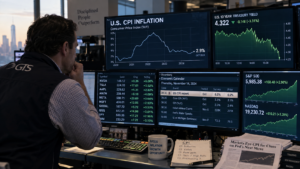
August CPI rose 0.4% from July and 3.4% from a year earlier, while core inflation increased 0.3% on the month, stronger than expected.
Producer prices had already risen 0.4% in August and 5.4% from a year earlier. Markets are now assigning close to a 90% probability to a quarter-point hike at the September 15-16 meeting.
Market pricing forced Goldman to rethink the call
The most important part of Goldman’s change is what did not change.
The bank did not materially revise its underlying inflation outlook.
Goldman only nudged its estimate for August core PCE inflation to 0.26% after the CPI report and still does not make further rate increases its base case after September.
Instead, Goldman concluded that with investors already pricing an almost certain hike, the Fed would be reluctant to surprise markets with a pause.
That could risk sending long-term Treasury yields sharply higher and raise questions about the central bank’s inflation credibility.
BofA Securities strategist Meghan Swiber made a similar point in comments carried by MarketWatch.
She said that if hike odds remain above 50% going into the meeting, policymakers would face a high bar to stand still because an unexpected pause could trigger another jump in longer-dated yields.
Inflation data strengthened the hawkish case
Goldman’s flip also came after two inflation reports made a pause harder to defend.
Headline CPI rose 0.4% in August, with gasoline accounting for more than a third of the monthly increase. Core CPI rose 0.3%, while the annual headline rate held at 3.4%.
That followed a 0.4% monthly increase in producer prices and a 5.4% annual rise. Goods prices climbed 1.1%, reflecting the impact of higher energy costs.
CIBC economist Helen Lao told MarketWatch that the firmer core CPI reading likely pushed more Fed officials towards supporting a hike. The data suggest inflation pressure is not limited to oil alone.
$100-plus oil makes a pause even harder
Energy is the final piece of the shift, as Brent crude was trading above $107 a barrel on Monday after attacks forced Saudi Arabia to halt its East-West pipeline, adding to existing disruption around the Strait of Hormuz.
Higher oil does not necessarily respond to tighter monetary policy, but it can keep headline inflation elevated and lift inflation expectations.
That is why Goldman’s change is less about one economic release and more about the policy risk of doing nothing when markets, inflation and energy prices are all leaning the same way.
Goldman’s Jonathan Shugar said in a separate September 11 analysis that a Fed hike would not automatically derail equities because corporate earnings remain strong and valuations are around their 10-year average.
The post Goldman Sachs flipped its Fed decision forecast: here’s what changed appeared first on Invezz